Despite a challenging year, our purpose remained constant: to advance disabled people’s rights and build an inclusive, equitable, and barrier-free society. We met immediate threats while strengthening our organisation and investing in leadership, representation and participation.
Financial pressures, restructuring and a strategic review created uncertainty. Nevertheless, we rebuilt our foundations, clarified our direction and secured funding, enabling faster, more effective responses to emerging challenges.
That renewed capacity proved vital when the UK Government proposed welfare reforms. The proposals caused widespread fear and threatened the income, independence and wellbeing of 190,000 Personal Independence Payment (PIP) recipients in Wales.
Disability Wales became a trusted national voice for member Disabled People’s Organisations (DPOs), disabled people and decisionmakers. Members relied on our clear, accessible information to understand, share and act on complex proposals.
With DPOs, we coordinated a national response: crowdfunding an accessible vehicle for direct engagement with Welsh MPs at Westminster, working with Members of the Senedd, informing Welsh Government responses and challenging inaccessible consultations. This advocacy accentuated Welsh disabled people’s voices and helped remove proposed PIP cuts from the Bill, averting a potential annual loss of £4,000–£5,000 per recipient.
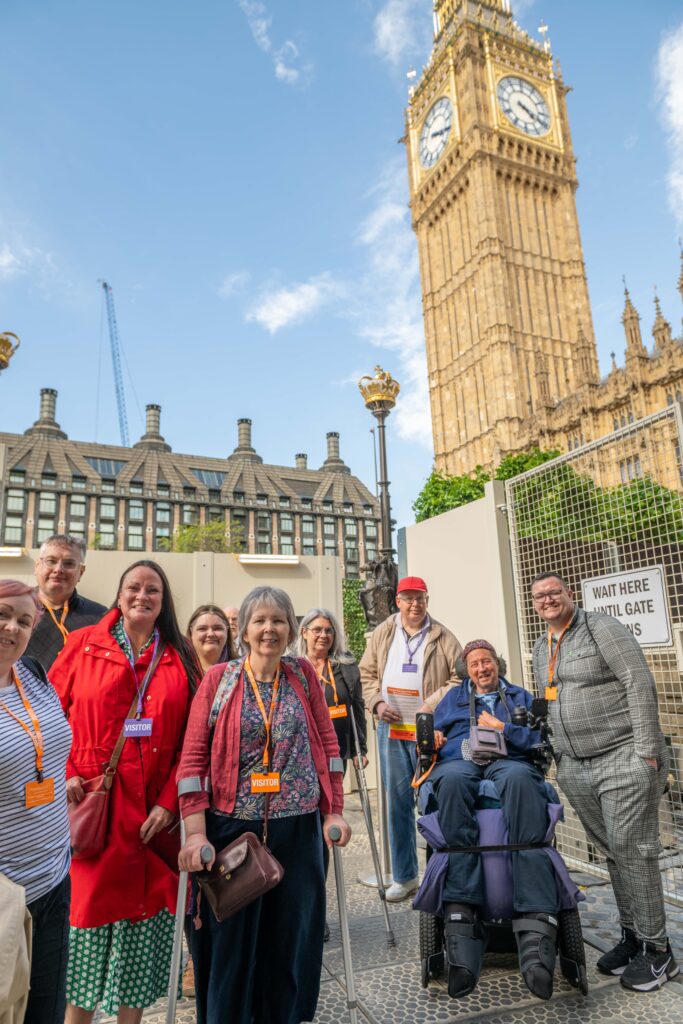
We also shaped long-term change through the Welsh Government Disability Rights Taskforce. In December 2025, Wales published its first 10-year Disabled People’s Rights Plan. Following our sustained lobbying, an External Advisory Board was established to keep disabled people central to delivery and accountability.
This year reinforced our view that greater representation of disabled people in positions of power is vital to reducing the threats we face. This principle guides our investment in leadership, representation and participation.
Through Equal Power Equal Voice (EPEV), delivered with WEN Wales, EYST and Stonewall, we supported 14 disabled participants into public and political leadership. While celebrating all mentees achievements, we are delighted that one former alumnus was elected to the Senedd. As one mentee said:
“And that’s what Equal Power Equal Voice is all about. It’s not just about getting a seat at the table - it’s about having the confidence to actually speak once you’re there. Because when someone believes in you, it shifts something. It makes you step forward instead of back. And it makes you realise you belong in the room”.
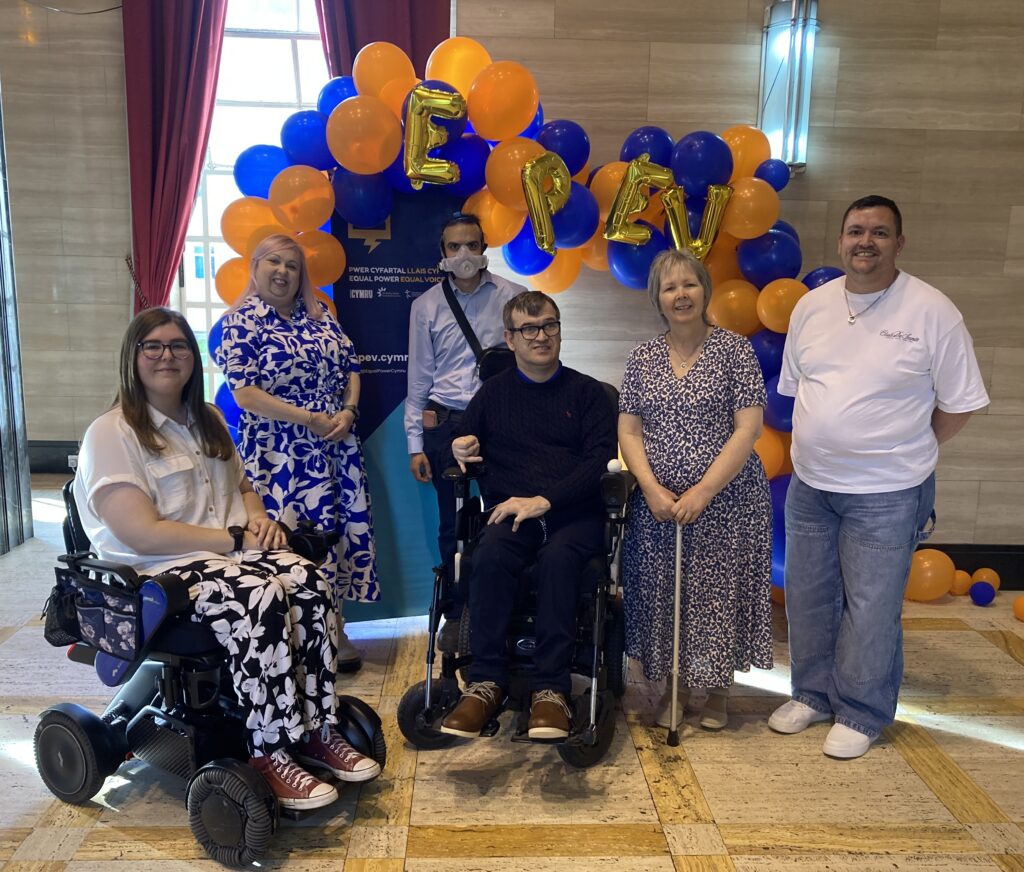
Our Access to Politics project grew a non-partisan network of 38 disabled people, supporting peers and future leaders. The “truly inspirational and personally very energising” Network co-produced the Access to Politics Charter, launched at the Senedd with practical steps for more accessible, inclusive parties. We urge every major Welsh party to adopt it. Generous donations in memory of our dear friend, activist and former colleague Graham Findlay will strengthen this work, for which we thank his family wholeheartedly.
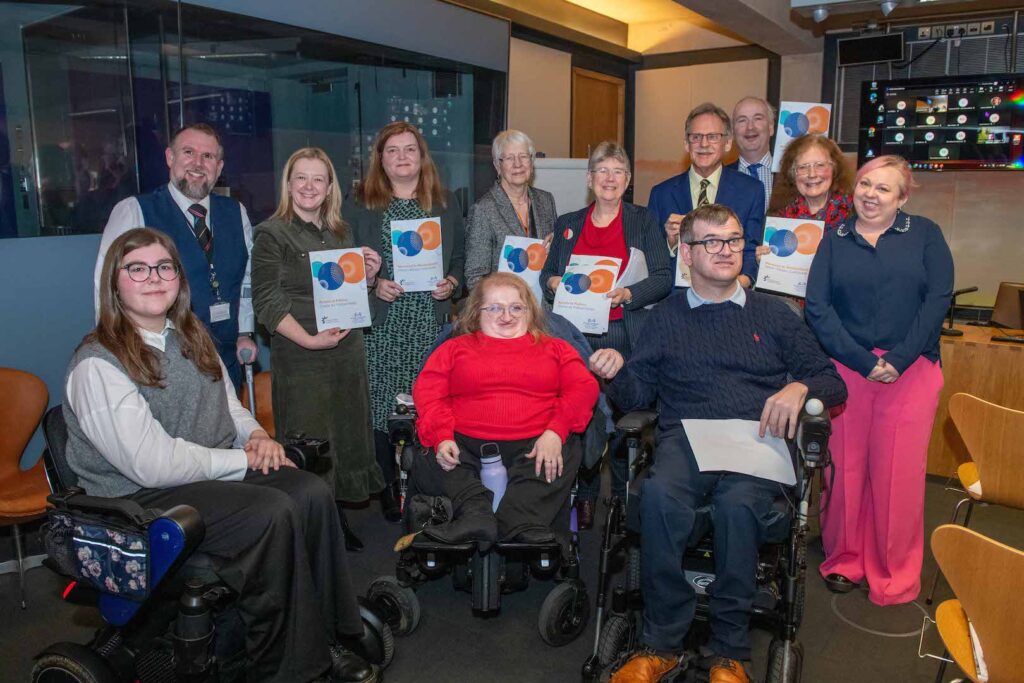
On behalf of Welsh Government, we relaunched the Access to Elected Office Fund to address barriers faced by disabled candidates. We supported four Senedd candidates and will promote the Fund before the 2027 local elections to encourage more disabled candidates for county and community councils.
Before the Senedd election, Disability Wales put members’ priorities on the political agenda. Co-produced with members, our manifesto, From Barely Surviving to Truly Thriving, drew on 57 responses from disabled people and organisations across Wales. Accessible campaign tools helped disabled people engage with candidates and hold them accountable.
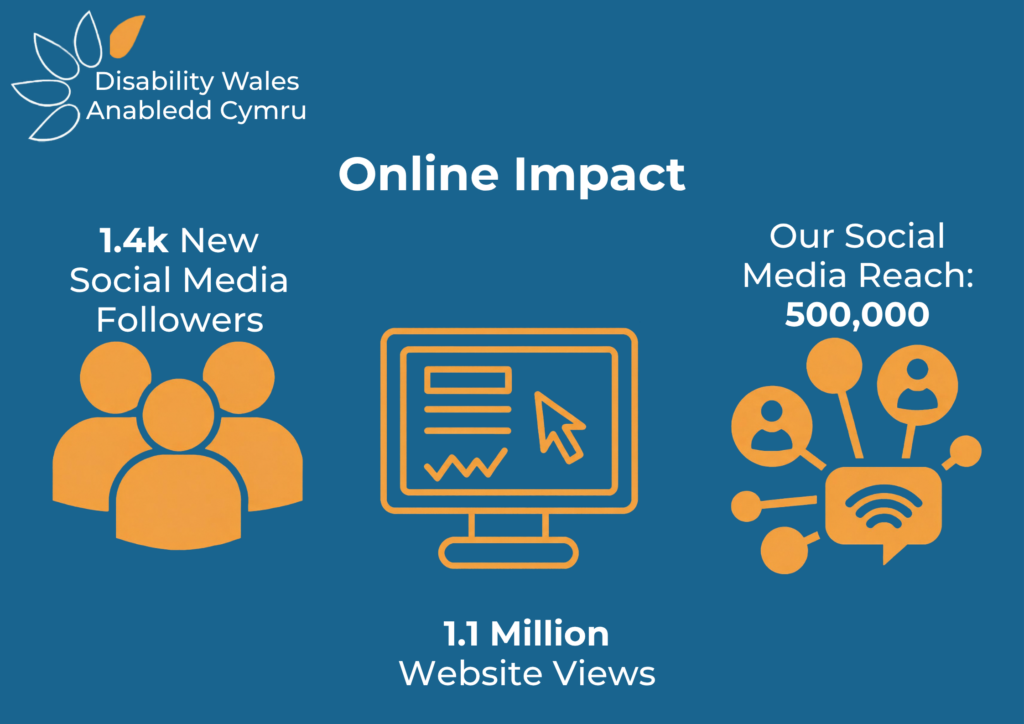
Our popular online resources reached thousands and helped clarify complex political positions. A national hustings enabled disabled people to question representatives directly. This secured several parties’ commitments to implement the Disabled People’s Rights Plan and incorporate the UN Convention on the Rights of Disabled People into Welsh law. These commitments have informed our discussions with incoming Welsh Government Ministers and Senedd Members and our plans for holding them to account for delivery and implementation.
Through the Single Advice Fund, we partnered with Citizens Advice in Gwent and Cwm Taf Morgannwg to improve access to advice. We will provide Social Model training and resources across 11 offices, helping more disabled people secure their rights and entitlements. We aim to replicate this approach across Wales.
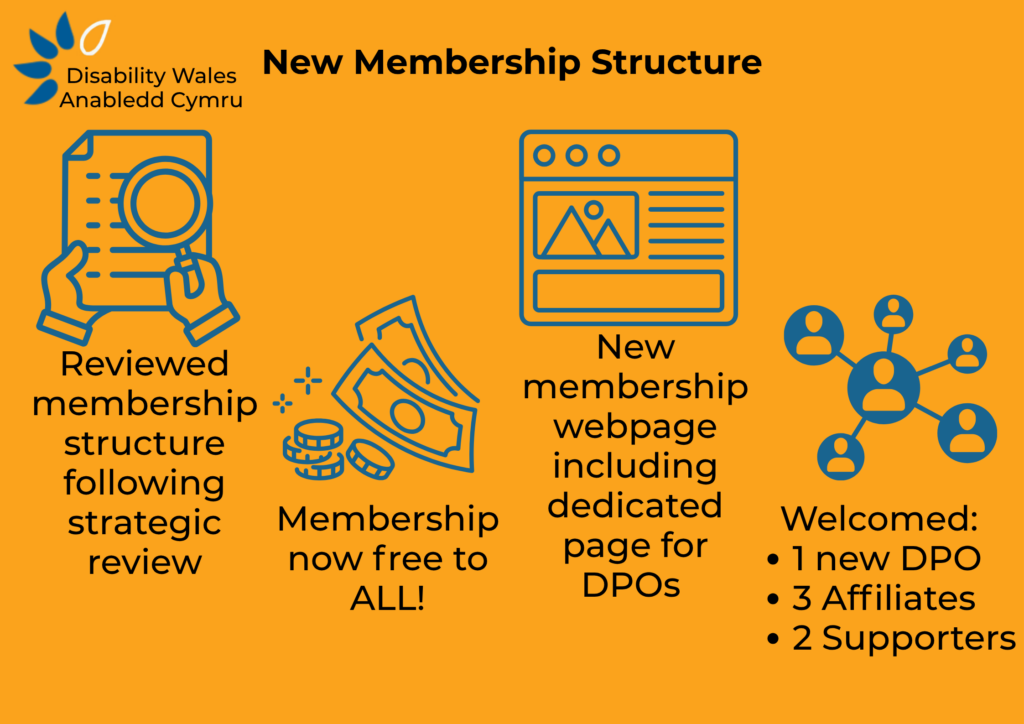
After our strategic review, we launched a refreshed plan at the 2025 AGM and updated our membership structure to serve and grow our 66 organisations and more than 500 individual members, including making membership free to all. Our three core activities drove progress despite challenging circumstances: championing the Social Model of Disability, campaigning to influence policy and attitudes, and building community through DPOs and disabled activists.
My heartfelt thanks go to our Board for its support and wisdom, and to our ten-strong team for boldly building towards a more inclusive Wales. Next year, we will strengthen our movement, advance the leadership of disabled people and hold decision-makers accountable for delivering lasting rights and equality.
Rhian Davies